Gaudí's hanging model
To design buildings — including the Sagrada Família — Antoni Gaudí used hanging, or "funicular," models. A string loaded with weights sags into a catenary / funicular curve set by the load at each point.
Invert that curve and you get a form that carries its load in pure compression, with no bending — the classic technique of form-finding. Funicular makes that method digital.
How it's made
Hang strings, sink them with weights, flip, and finish. Architecture rises in four stages.
01
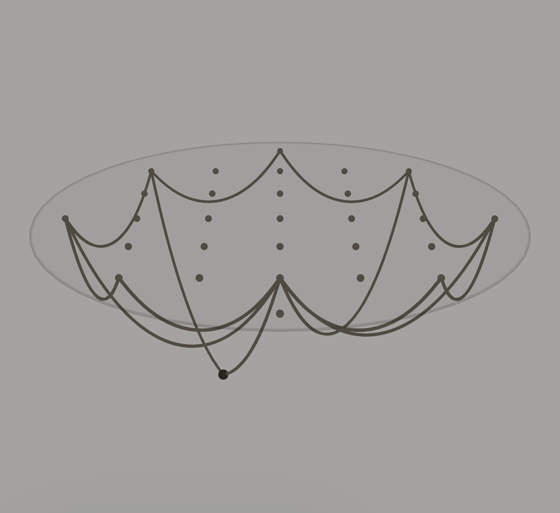 Hang strings
Connect dots on the base; gravity makes them sag
Hang strings
Connect dots on the base; gravity makes them sag
Hang strings
Connect dots on the base; gravity makes them sag
02
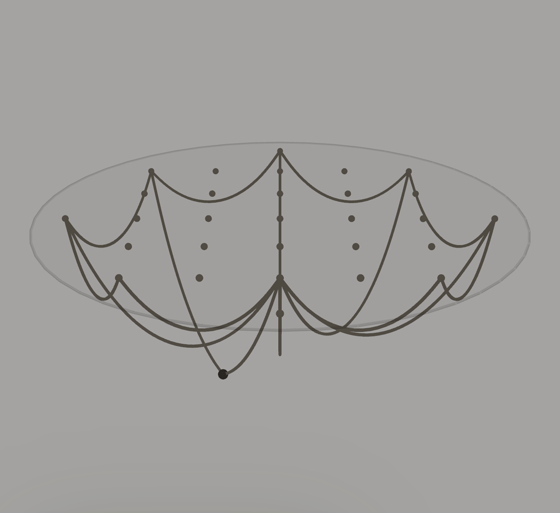 Shape with weights
Position and weight sink the curve
Shape with weights
Position and weight sink the curve
Shape with weights
Position and weight sink the curve
03
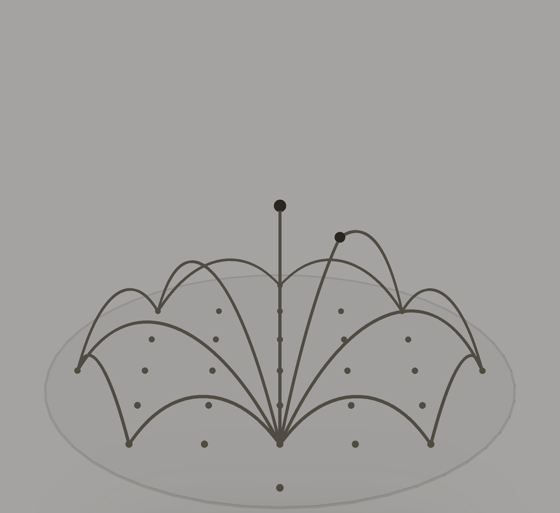 Flip it
It stands in pure compression
Flip it
It stands in pure compression
Flip it
It stands in pure compression
04
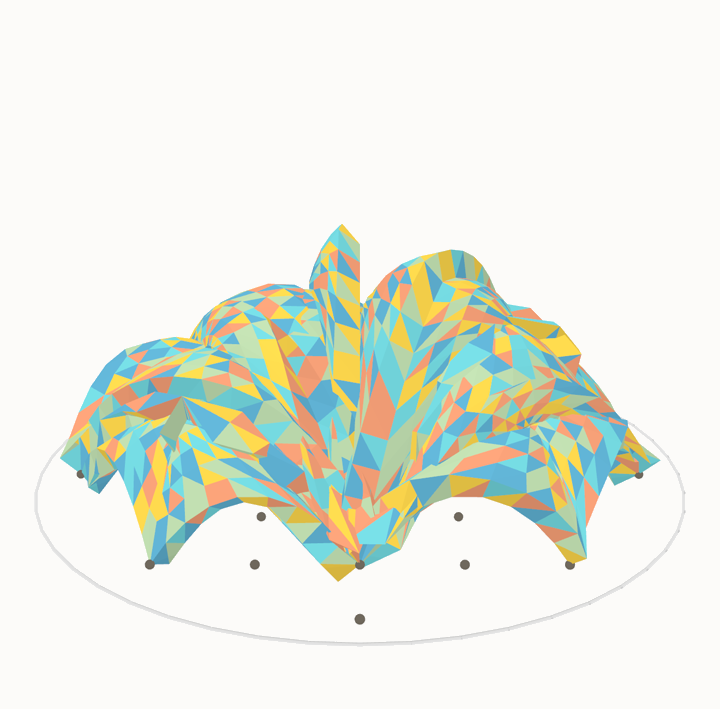 Finish
Build surfaces, add color and texture
Finish
Build surfaces, add color and texture
Finish
Build surfaces, add color and texture
Finishing & color
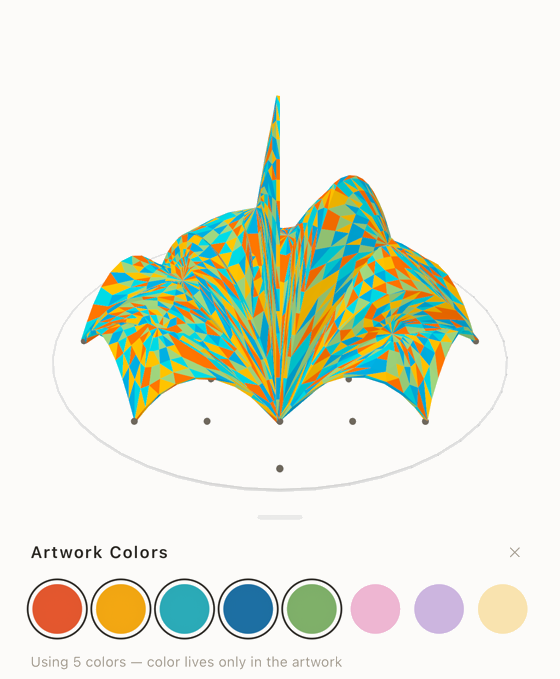
Trencadís (broken-tile mosaic), glowing stained glass, earthy terracotta. Pick a few colors and watch them settle into the model.
Three ways to find form
When you generate the white building, choose from three architects' techniques.
Antoni GaudíOrganic masonry-vault shells
Frei OttoLight tensile-membrane tents
Heinz IslerSmooth, seamless thin shells
What you can make
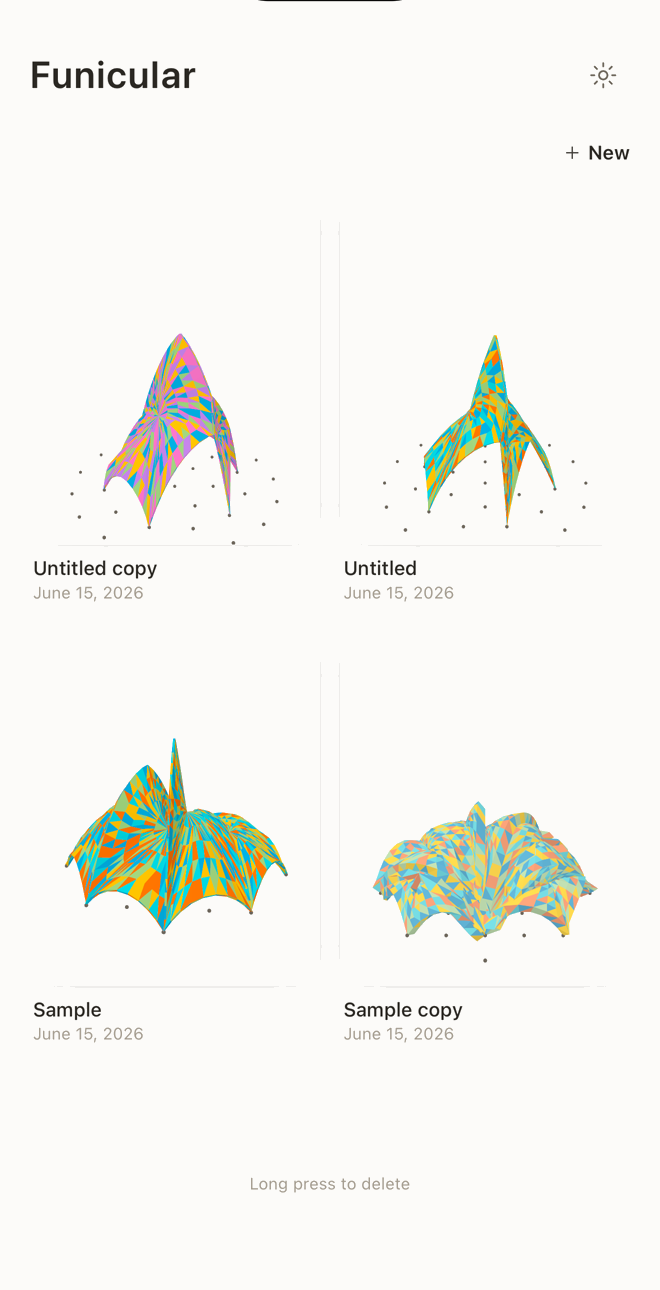
One principle, countless forms.
FAQ
- Is it free?
- The core — hanging, weights, flipping, generating a building — and the basic art finishes are free. Pro (a one-time purchase) unlocks every art finish and larger scale (more dots, more levels, base size).
- Does it work on iPad?
- Yes. Funicular runs on both iPhone and iPad.
- Does it work offline?
- Yes. Both the string physics and the building generation run entirely on your device.
- Will deleting the app erase my work?
- Yes. Artworks are stored on your device, so deleting the app removes them. You can export important pieces as images to your Photos library.